Kafalah · كفالة · Saudi SMEs
Kafalah — the most common way Saudi SMEs actually finance AI.
Kafalah issued SAR 13.9 billion in SME loan guarantees in 2024 and another SAR 4.8 billion in Q1 2025 alone — cumulative guarantees now approach USD 23.8 billion. It is the financing layer most KSA SMEs reach for when they want to invest in something serious, including AI. We're an AI implementation team based in Riyadh on Olaya Street; this page explains how a Kafalah-backed loan funds the kind of work we do, in plain language.
What Kafalah is, in plain language كفالة
Kafalah — formally the Small and Medium Enterprises Finance Guarantee Program — is a government-backed credit guarantee scheme operating under the Ministry of Finance. Its job is to make banks comfortable lending to SMEs that would otherwise be turned away on collateral or credit-history grounds. It does not lend money directly. It guarantees a portion of the bank's exposure on a loan that the bank itself underwrites and disburses.
That distinction matters. When a Saudi SME goes to SAB, SNB, ANB, SAIB, Al Rajhi, Riyad Bank, Bank Albilad, Alinma, or any other Kafalah partner and asks for a working-capital or capex loan, the bank's credit committee assesses it on standard commercial terms. Kafalah then steps in behind the bank and says: if this SME defaults on the agreed coverage portion, we'll cover it. That backstop is what turns a "no" or a "maybe" into a "yes" — and in 2024 it turned into SAR 13.9 billion of fresh SME credit.
For an SME thinking about AI, the practical takeaway is straightforward: the loan you take from your bank is a normal commercial loan, but Kafalah's involvement is often what made it possible in the first place. Your bank treats the proceeds as fungible — you can spend them on inventory, equipment, marketing, or a Creatrixe implementation invoice. There is no Kafalah-specific carve-out for technology; the money is the money.
Source: kafalah.gov.sa · Program operated under the Ministry of Finance · 2024 issuance and Q1 2025 figures per Kafalah annual disclosures and SAMA reporting.
Who qualifies — eligibility, plainly
Kafalah's eligibility is anchored to the Monsha'at SME size definition. If your business is licensed and operating in Saudi Arabia and fits one of these size bands, you are eligible at the program level.
1–5 employees
- Smaller ticket sizes, faster underwriting
- Common for early-stage operators
- AI fit: 1 production agent + integrations
6–49 employees
- The sweet spot for Kafalah deal flow
- Typical ticket SAR 1M–5M
- AI fit: multi-agent operational system
50–249 employees
- Larger structured facilities
- Multi-tranche disbursement common
- AI fit: enterprise-grade rollout
What pushes an application from "eligible" to "approved" is the bank's view, not Kafalah's. Banks want to see a credible operation, clean records, and a sensible use of funds. The technology bit — what you'll actually do with the money — is where we usually help: a one-page integration diagram and a fixed budget range make a credit committee's life much easier than a generic "digital transformation" narrative.
Coverage ratios — what Kafalah actually guarantees
Standard sectors — the vast majority of SMEs — receive guarantee coverage up to 80% of the underlying bank loan. The exact percentage depends on the Kafalah product applied and the bank's risk appetite, but 70–80% is the working range you'll see most often in standard cases.
Strategic sectors — primarily tourism and entertainment, plus a few targeted product carve-outs that shift with national priorities — can attract coverage of up to 90%. If your business sits in one of these sectors, your bank's exposure is materially reduced and the underwriting bar shifts accordingly. AI work for hotels, F&B at scale, attractions, and entertainment operators benefits from this directly.
One useful clarification: the coverage ratio applies to the loan amount that defaults, not the disbursement itself. The bank disburses 100% to you. Kafalah's guarantee is what kicks in if the loan goes bad — and that's what shapes the bank's willingness to lend in the first place.
Loan sizes — what you can borrow
Kafalah supports a range of facility types — working capital, capex, and bespoke structured products. Typical loan sizes through Kafalah-guaranteed channels sit in the SAR 2.5 million to SAR 15 million band, with smaller tickets available for micro borrowers and larger structured deals for medium-sized SMEs.
For AI implementation specifically, the financing ticket is usually a fraction of the overall facility — most SMEs roll AI investment into a broader working-capital or capex request. A typical pattern: an SME borrows SAR 3M against a Kafalah-guaranteed facility for general operational growth, and earmarks a portion (say SAR 500K–1.5M) for an AI deployment that improves the very margins underpinning the loan repayment.
Issuance figures: Kafalah annual disclosures and Saudi Central Bank (SAMA) SME credit reporting. Cumulative figure approximates total financing enabled by the program since inception across all partner banks.
How a Kafalah-guaranteed loan funds AI work
The mechanics are uncomplicated. The SME borrows from a partner bank. The bank disburses the loan. The SME uses the proceeds to pay its suppliers — including, where relevant, Creatrixe's invoices for the AI implementation. Kafalah is not in the middle of the supplier payment; it sits behind the bank's credit decision.
Concrete example
Riyadh restaurant group — AI ordering + AI receptionist
A two-location restaurant group on Tahlia and in Diriyah needs an AI ordering system for late-night demand spikes and a bilingual AI receptionist to handle table reservations across both venues. The owner approaches their bank for a SAR 1.0M working-capital facility under a Kafalah-guaranteed structure.
- Borrower
- Restaurant group, 2 locations, SAR 18M revenue (Small SME)
- Sector classification
- Hospitality / F&B — borderline strategic
- Bank
- SNB
- Loan amount
- SAR 1,000,000 working-capital facility
- Kafalah coverage
- ~80% of bank exposure
- AI implementation
- SAR 280,000 — Creatrixe scope (12 weeks build + 12 months operate)
- Remainder of proceeds
- Inventory + Tahlia branch refit + working capital buffer
The owner pays Creatrixe's invoice out of the disbursed loan proceeds like any other supplier payment. There is no special process at the Kafalah side. What does matter is that the loan application included a credible use-of-funds memo — we wrote the AI portion of that memo with the owner before the bank submitted.
This pattern repeats across sectors — clinics, professional services, retail chains, family holdings. The Kafalah-guaranteed loan is the fuel; the AI implementation is one of several places that fuel gets spent. Owners who treat the conversation honestly — "here's how this loan repays itself in better margins" — tend to find the bank conversation goes much faster than owners who try to sell a credit committee on transformation rhetoric.
How Creatrixe fits — the honest version
We are not a financing intermediary. We do not introduce you to banks, broker your loan, or take a percentage of borrowed capital. Creatrixe is an AI implementation team based in Riyadh with a delivery presence across the GCC. The work we sell is software that runs in your business and earns its keep — voice agents in Arabic and English, intake automation, scheduling and follow-up, back-office workflow agents, and the integration work that wires it all into the CRM or POS you already use.
Where Kafalah enters the picture is on your side of the table: it's a way you might fund the engagement. From our perspective, a Kafalah-funded client and a self-funded client look identical at delivery time — same scoping, same milestones, same accountability. We just write a use-of-funds memo for the bank pack if it helps you close the loan.
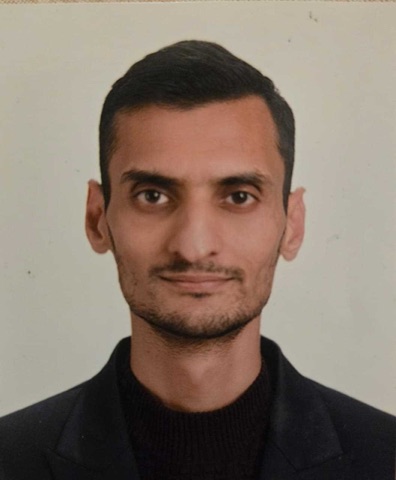
"We've sat in on enough bank meetings to know what the credit committee wants to see."
Saif runs scoping for KSA engagements. If you're walking into a Kafalah-routed conversation with your bank's SME desk, he'll send you a one-page use-of-funds memo and integration diagram you can put in the file — no charge, no obligation. Easier than trying to explain "AI agents" to a credit committee in their own words.
Process flow — start to disbursement
Most SMEs reach disbursement in 6–14 weeks from first bank conversation. The variance is mostly about documentation cleanliness on the borrower's side. Here is the path that works.
Step 1 — Internal scoping
Decide what the loan is actually for. Working capital, capex, AI tooling, or some blend? Write a one-paragraph use-of-funds statement. If AI is in scope, we'll send you a short scope sketch (free) you can attach. The clearer this is, the faster the bank moves.
Step 2 — Approach a Kafalah partner bank
Go to your existing bank's SME desk first — they already have your transaction history. If you don't have a banking relationship, choose a partner with a strong SME team in your sector (Al Rajhi, SNB, SAB, ANB, SAIB, Riyad, Bank Albilad, Alinma, Banque Saudi Fransi all participate). Ask explicitly for a Kafalah-guaranteed facility — bank staff sometimes default to alternatives if you don't.
Step 3 — Documentation pack
Submit Commercial Registration, Articles of Association, audited financials (last 2–3 years where available), VAT/Zakat certificates, bank statements (typically last 12 months), and your use-of-funds memo. Foreign-owned SMEs add their MISA investment licence. For AI scope, attach the Creatrixe scope sheet.
Step 4 — Bank credit assessment
The bank's credit committee evaluates your application on its own terms. They will look at cashflow, leverage, sector outlook, and the credibility of the use of funds. Kafalah is involved in parallel — the bank submits the guarantee request once they are inclined to approve internally.
Step 5 — Kafalah guarantee decision
Kafalah evaluates the guarantee request on program criteria — eligibility, coverage applicable, sector classification. Decisions are typically fast at this stage (days, not weeks) once the bank's submission is complete. The output is a formal guarantee that the bank attaches to its facility.
Step 6 — Loan disbursement & AI work begins
The bank disburses to your operating account on the agreed schedule (lump sum or tranches). You pay your suppliers — including, if applicable, Creatrixe's milestone invoices for the AI implementation. We start the build the week the first tranche lands.
Kafalah partner banks البنوك الشريكة
Kafalah operates through Saudi commercial banks. Your existing relationship is usually the right starting point. If you bank in more than one place, the SME desk with the strongest sector specialisation tends to move fastest.
This list is indicative — Kafalah's partner roster is published and refreshed on the official portal. We are bank-agnostic; we have worked alongside clients going through SNB, Al Rajhi, and SAB and have no preferred relationship to push.
Authoritative partner list: kafalah.gov.sa.
Bilingual considerations — Arabic, English, and both عربي / English
The Kafalah portal and partner-bank SME desks are bilingual end-to-end. You will not be disadvantaged operating in English, but most credit committees process Arabic faster — especially for use-of-funds narratives, supplier descriptions, and sector classifications. If your business operates primarily in Arabic, write the use-of-funds memo in Arabic and let the bank translate as needed; the file moves faster.
Creatrixe documentation, scope sheets, and contracts are available in English or Arabic on request. Our delivery is bilingual at the agent level too — most of the production AI we build for KSA handles bilingual EN/AR conversation natively, because that's how Saudi customers actually talk. (See our /sa/ services overview for what bilingual deployment looks like.)
For foreign-owned SMEs, the practical workflow is usually: English internally, Arabic to the bank. We can prepare both versions of the AI scope so the bank pack lands clean.
Kafalah vs other Saudi SME financing routes
Kafalah is not the only door, but for most SME AI projects it is the most natural one. The honest comparison:
Quick comparison — Kafalah vs alternatives
For most SMEs reading this page, the right path is to start at Monsha'at (the umbrella authority), let them route you, and arrive at a Kafalah-guaranteed facility through a partner bank. We have a parallel page that walks through the Monsha'at side: Monsha'at — Saudi Arabia's SME Authority.
Vision 2030 alignment رؤية 2030
Kafalah sits inside the Financial Sector Development Program (FSDP), one of the Vision Realisation Programs under Vision 2030. The FSDP's headline KPI for SME credit is to lift the SME share of total bank lending from roughly 5% when the program was set up to over 10% by 2030. Kafalah is the primary mechanism through which that target is being pursued — the guarantee layer that lets banks lend to SMEs they otherwise wouldn't.
This matters for the AI conversation because AI adoption sits inside Vision 2030's broader productivity and digital-transformation agenda. A Kafalah-funded AI project is therefore well-aligned across two national priorities at once: the SME credit-share KPI on the financing side, and the productivity / digital agenda on the implementation side. For owners building a narrative for an internal board, a family council, or a government-facing audience, that double alignment is genuinely useful and not just rhetoric.
For more on how we frame the Vision 2030 conversation honestly without overselling it, see the /sa/ hub or how we work in the GCC. The longer write-up — eligibility, partner bank shortlist, and the use-of-funds memo we typically draft — is at Kafalah for AI: how Saudi SMEs finance digital transformation with 90% loan guarantees.
Common questions about Kafalah أسئلة شائعة
Does my SME qualify for Kafalah?
If your business is licensed and operating in Saudi Arabia and fits Monsha'at's SME size bands (Micro 1–5 employees / under SAR 3M revenue; Small 6–49 / SAR 3–40M; Medium 50–249 / SAR 40–200M), you are eligible at the program level. Kafalah is a loan guarantee — the actual lending decision is made by a partner bank (SAB, SNB, ANB, SAIB, Al Rajhi, Riyad Bank, etc.) under their own KYC and credit policies. There is no explicit Saudi-national ownership requirement at the Kafalah level; foreign-owned SMEs with a valid MISA investment licence routinely access the program.
Which partner bank should I approach first?
If you already bank with one of Kafalah's partners (SAB, SNB, ANB, SAIB, Al Rajhi, Riyad Bank, Bank Albilad, Alinma, Banque Saudi Fransi, among others), start there — the underwriting goes faster when the bank already has your transaction history. If you don't have a banking relationship yet, choose the partner with the strongest SME desk in your sector. We are bank-agnostic and have worked alongside clients going through SNB, Al Rajhi, and SAB; we can sit in the scoping call if it helps.
How long does the Kafalah process take?
End-to-end, expect 6–14 weeks from first bank conversation to disbursement, depending on how clean your documentation is and the complexity of the underlying use case. Pre-qualified SMEs with established banking relationships sometimes close in under a month. The Kafalah guarantee decision itself is usually fast once the bank submits — the slower piece is the bank's own underwriting.
What documents will the partner bank need?
Standard package: Commercial Registration (CR), Articles of Association, audited financials (last 2–3 years where available), VAT/Zakat certificates, bank statements (typically last 12 months), and a use-of-funds memo describing the project. For AI work, the use-of-funds memo is where Creatrixe contributes — we provide a scoped proposal, integration diagram, and fixed budget range that lets the bank credit committee see what the money is actually buying.
Does Kafalah cover the whole loan?
No. Kafalah guarantees a portion of the bank's exposure — up to 80% in standard sectors and up to 90% in strategic sectors such as tourism and entertainment. The bank still carries residual risk on the uncovered portion, which is why the bank's own KYC and credit assessment still matters. From the borrower's perspective, the loan is a normal commercial bank loan; Kafalah's involvement is what makes the bank comfortable lending in the first place.
Can a foreign-owned SME access Kafalah?
Yes, in practice. Kafalah's eligibility criteria are framed around Saudi-licensed SMEs meeting the size bands, not around shareholder nationality. Foreign-owned entities with a valid MISA investment licence and a functioning Saudi operation can access the program. The partner bank applies its own KYC — which for foreign owners typically means more documentation upfront, but the program itself is not closed to them. Saudization compliance for your workforce is checked at the operational level (Nitaqat), not by Kafalah specifically.
How does Kafalah fit into Vision 2030?
Kafalah sits under the Financial Sector Development Program (FSDP), one of the Vision 2030 realisation programs. A headline FSDP KPI is lifting SME credit share from roughly 5% of total bank lending to over 10%. Kafalah is the primary mechanism through which that target is being pursued — by reducing the risk friction that historically kept banks from lending to SMEs. AI adoption sits inside Vision 2030's broader productivity and digital transformation agenda, so a Kafalah-funded AI project is unusually well-aligned with national priorities.
Kafalah vs SIDF — which one for an AI project?
Different instruments for different SMEs. SIDF (Saudi Industrial Development Fund) is direct lending, larger ticket sizes, and skewed to industrial / manufacturing / mining / logistics capex — not the natural home for a pure AI implementation. Kafalah is a guarantee scheme overlaid on regular commercial bank lending, which makes it far more flexible for software, consulting, and digital-transformation use cases. For a standalone AI project at most SMEs, Kafalah is the more practical route. If your AI work is paired with a major industrial expansion, SIDF + Kafalah blends are possible — we can talk through the structure.
The honest pre-call read
If you're about to book a scoping call, here is the short version of what we'll tell you on it — so you can decide whether the call is worth your time.
- If your business is not yet licensed in Saudi Arabia or you're below the Micro threshold, Kafalah is not the right tool yet — focus on operating fundamentals first.
- If your bank relationship is brand new and your records are not yet audited, expect a longer cycle. Kafalah doesn't fix a thin credit file; it just makes the lending decision easier once the file is there.
- If the AI work you want to fund has no measurable operational handle (missed bookings, intake leakage, follow-up gaps, back-office hours, response-time SLAs), we'll tell you to wait. Lending against narrative is harder than lending against numbers.
- If you have a clean operation, a working bank relationship, and a clear pain point AI can plausibly solve, then a Kafalah-guaranteed facility is one of the most efficient ways in market to fund the work.
For the longer view on how we think about scoping these engagements in the Gulf, the how we work page lays it out plainly.
Considering Kafalah financing for an AI project?
30-minute scoping call with Saif, in person at Olaya Street or remote. We'll tell you whether Kafalah is the right tool for your situation, what a defensible use-of-funds memo looks like, and — if we'd recommend you not pursue it — we'll say that too.