Monsha'at · منشآت · Saudi SME Authority
Monsha'at is Saudi Arabia's SME hub — and the front door to almost everything else.
Monsha'at — the General Authority for Small and Medium Enterprises — sits under the Ministry of Commerce and is the anchor agency for the Vision 2030 SME agenda. The goal it carries is direct: lift the SME share of Saudi GDP from ~20% to 35% by 2030. Almost every other SME mechanism in the Kingdom — Kafalah, the SME Bank, accelerators, accreditation — routes through or coordinates with Monsha'at. We're an AI implementation team based in Riyadh on Olaya Street; this page explains what Monsha'at actually does and how the AI work we deliver fits into it.
What Monsha'at actually is منشآت
Monsha'at — formally the General Authority for Small and Medium Enterprises — was established to serve as the anchor agency for SME policy in Saudi Arabia. It reports under the Ministry of Commerce, and its job is to coordinate everything that touches SMEs at a national level: policy, advisory infrastructure, training pipelines, accreditation networks, accelerators, and routing to financing instruments such as Kafalah and the SME Bank.
The shorthand most useful for an operator: Monsha'at does not write you a cheque. It is a coordination, advisory, and routing authority. When SMEs talk about "Monsha'at support," they usually mean one or more of: free or subsidised advisory through the SME Support Centers (SSC), training through the Monsha'at Academy, participation in a Monsha'at-branded accelerator like Tomoh, access to a partner-service package at discounted rates, or — most commonly — being routed to the right financing instrument (typically a Kafalah-guaranteed bank loan).
For a Saudi SME thinking about AI adoption, Monsha'at is the right place to start the wider conversation even though the AI implementation invoice itself will usually be paid out of a bank loan, not by Monsha'at directly. Registering with Monsha'at puts you inside the SME ecosystem; not registering leaves you outside several of the most useful programs.
Source: monshaat.gov.sa · Authority operating under the Ministry of Commerce, Kingdom of Saudi Arabia. Vision 2030 SME GDP target: 20% (baseline) → 35% (2030).
SME size bands — Monsha'at's definition
Monsha'at sets the official SME size definition used across the Kingdom. These are the same thresholds Kafalah, the SME Bank, and most government-facing SME programs reference. If you operate in Saudi Arabia, this is the band your business sits in.
1–5 employees
- Solo operators, early-stage outfits
- Eligible for most advisory + training services
- AI fit: 1 production agent, lean ops
6–49 employees
- The bulk of Monsha'at's served base
- Strong fit for accelerator pathways
- AI fit: multi-agent operational stack
50–249 employees
- Often candidates for Tomoh / Nomu pipelines
- Larger structured financing routing
- AI fit: enterprise-grade rollout
What Monsha'at actually does
Useful to separate four functions, because they are often blurred together in casual conversation:
- Advisory. Free or subsidised expert advisory via the SME Support Centers (SSC) program and partner networks. Strategy, operations, marketing, legal, technology — most disciplines an SME would otherwise pay a consultancy for at market rates.
- Training & capability building. Monsha'at Academy delivers structured training pipelines and certifications, from founder-level fundamentals through specialist tracks. The format ranges from short online courses to multi-week cohort programs.
- Accreditation & accelerator pipelines. Monsha'at runs and accredits accelerators (Tomoh being the flagship), sector incubators, and curated cohort programs. These are how SMEs gain exposure, investor access, and structured scale-up support.
- Routing to financing. Monsha'at does not lend directly at scale, but it routes SMEs to the right instrument — typically Kafalah for guarantee-backed bank lending, the SME Bank for direct lending, or specific sector partners. This routing function is one of the most quietly valuable things Monsha'at does, because the financing landscape is otherwise hard to navigate from cold.
Worth noting what Monsha'at is not: it is not a direct grant agency for arbitrary projects, it is not a procurement entity for SME purchases, and it does not certify specific vendors as "Monsha'at-approved" in any blanket sense. The accreditation it does run is program-specific (e.g., the SSC consultant roster), not a general vendor-approval stamp.
Key Monsha'at programs you should know
SSC — SME Support Centers
The flagship advisory program. SMEs receive subsidised expert consultancy across strategy, operations, marketing, legal, finance, and technology disciplines via Monsha'at-approved consultancy partners. The roster is curated; the rates are subsidised by Monsha'at; the scope is project-by-project.
Tomoh — Fast-growth program
Monsha'at's accelerator for SMEs on a credible growth trajectory. Past intakes have produced 40+ Nomu (parallel market) listings, with reported cohort revenues approaching SAR 40bn across 3,250+ participating firms. Selective by design; useful if you are growth-staged and capital-markets-curious.
Monsha'at Academy
Structured training and certification pipeline. Bilingual EN/AR delivery, ranging from founder-level fundamentals through specialist tracks (digital, finance, ops). Useful for founders and operators building capability before they can afford full-time hires.
Discounted partner packages
Curated catalogues of partner services — cloud, software, professional services, marketing — available to registered Monsha'at SMEs at meaningful discounts. The catalogue refreshes; check the current portal for what is active in your sector.
Financing routing & coordination
The behind-the-scenes function — Monsha'at coordinates with Kafalah, the SME Bank, and partner banks to make sure registered SMEs land at the right financing door. The most common outcome is being directed to a Kafalah-guaranteed facility through a partner bank.
Sector-specific incubators
Monsha'at runs and supports sector-focused incubators — tech, food, retail, manufacturing, tourism — usually in coordination with sector authorities. Useful when your AI work is anchored to one sector's operational patterns rather than a generic playbook.
Tomoh figures (40+ Nomu listings, ~SAR 40bn cohort revenue, 3,250+ firms) reflect cumulative program totals reported by Monsha'at. Authoritative current details: monshaat.gov.sa.
How Monsha'at and Kafalah work together
The cleanest mental model: Monsha'at sits upstream of financing, and Kafalah sits at the financing layer itself. An SME's typical journey runs in that order — register with Monsha'at, access advisory and routing, get directed to a Kafalah-guaranteed bank loan for capital deployment, and use the loan proceeds to fund whatever the SME is actually building (including, where relevant, AI implementation).
This matters because the two authorities answer different questions. Monsha'at answers: "Are you an SME in our ecosystem, and what services should you be using?" Kafalah answers: "If your bank lends to you, will we backstop the risk?" Both answers usually need to be yes before money moves. Skipping the Monsha'at step doesn't disqualify you from Kafalah — banks can route to Kafalah directly — but most SMEs find the pre-financing advisory layer materially useful even when they could technically go straight to a bank.
For the deeper read on the financing side, see our companion page on Kafalah — how Saudi SMEs finance AI projects with up to 90% loan guarantees.
The typical sequence
From Monsha'at registration to AI implementation
How Creatrixe fits — the honest version
We are not a Monsha'at advisory body and we are not a financing intermediary. Creatrixe is an AI implementation team based in Riyadh with delivery presence across the GCC. Our day-to-day work is software that runs in your business and earns its keep — bilingual EN/AR voice agents, intake automation, scheduling and follow-up, back-office workflow agents, and the integration work that wires it into your CRM, POS, or scheduling tool.
Where Monsha'at enters the conversation is mostly on your side of the table — the route your business takes to access the broader SME ecosystem, including the financing that often pays our invoices. From our delivery perspective, a Monsha'at-routed client and a self-funded client look identical: same scoping, same milestones, same accountability. We're happy to coordinate with any Monsha'at-accredited advisory layer you've engaged — the SSC consultancy doing your strategy work, for example, can hand off cleanly to us for the implementation work, and vice versa.
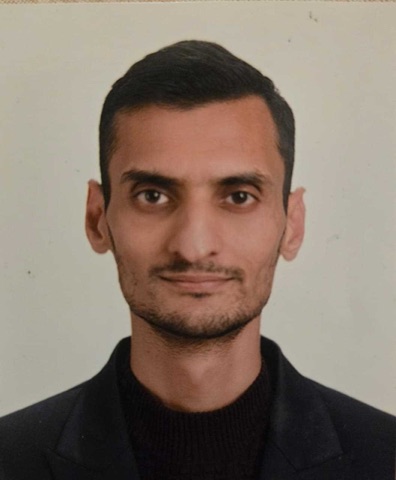
"Most owners over-think the Monsha'at side. Get registered, then get on with the work."
Saif runs scoping for KSA engagements from Olaya Street. If you're navigating the Monsha'at ecosystem and trying to figure out where AI fits, he'll walk through it with you in a 30-minute call — no charge, no obligation. He'll tell you honestly whether the advisory-and-routing layer is worth your time at your current stage, or whether you should just go directly to a bank.
Process flow — from Monsha'at registration to AI in production
For SMEs that haven't started yet, here is what the path looks like in practice. The timeline assumes a reasonably well-organised business; messy paperwork extends every step.
Step 1 — Register with Monsha'at
Sign up at monshaat.gov.sa using your business credentials (Commercial Registration, MISA licence if foreign-owned, etc.). The base registration is fast — typically a single session. Once registered, you can browse the active program catalogue: SSC, Tomoh, Academy, partner packages, sector incubators.
Step 2 — Identify the right program(s)
Match your current need to the program. If you're early-stage and need capability building, Monsha'at Academy + SSC advisory. If you're growing fast and contemplating capital markets, look at Tomoh. If you're ready to invest and need financing, the routing layer will direct you toward Kafalah-channel facilities. Most SMEs use more than one program over time.
Step 3 — Access advisory (optional but useful)
If your AI scope is still vague, the SSC advisory layer is genuinely useful for sharpening it — the consultancy partners on the SSC roster have done this work for many SMEs before. If your scope is already clear (you've already had a conversation with us or another implementation team), you can skip this step and go directly to financing.
Step 4 — Get routed to financing
Monsha'at's routing function points you to a partner bank for a Kafalah-guaranteed facility, or to the SME Bank for direct lending, or to a sector-specific partner. The choice depends on size, sector, and your existing banking relationships. Most SMEs land in the Kafalah-guaranteed track via their existing primary bank.
Step 5 — Bank underwrites, Kafalah guarantees, loan disburses
From here the process is the standard Kafalah-channel sequence — documentation pack, bank credit assessment, Kafalah guarantee submission, disbursement. Timelines vary by bank and documentation cleanliness; 6–14 weeks end-to-end is the working range. See the Kafalah page for the detailed mechanics.
Step 6 — AI implementation begins
Once the loan lands, the AI build starts. For a typical Small SME the engagement runs 12–24 weeks for the initial build and integration, then an ongoing operate-and-improve phase priced from SAR 4,000 / month. We coordinate with any Monsha'at-accredited advisor you've engaged on the strategy side.
Bilingual considerations — Arabic, English, and both عربي / English
The Monsha'at portal is fully bilingual end-to-end, and most program content (advisory templates, Academy modules, accelerator collateral) is available in Arabic with English alternates. You will not be disadvantaged operating in English. That said, most program staff and accredited advisors operate in Arabic by default — communications, document templates, and informal exchanges typically move faster in Arabic.
For foreign-owned SMEs, the practical workflow is usually mixed: English internally, Arabic-when-needed externally. Creatrixe documentation is available in either language on request. Our actual production AI is bilingual at the agent level too — most of the systems we build for KSA handle Arabic and English conversation natively, because that is how Saudi customers actually talk. (See the /sa/ services overview for what bilingual AI delivery looks like.)
Monsha'at vs Kafalah, and the other instruments — when to use what
The most common confusion among SMEs new to the Saudi system is whether Monsha'at and Kafalah are alternatives or layers. They are layers — different jobs at different points in the journey.
Quick comparison — Monsha'at and the financing layer
The right mental model: Monsha'at gets you registered and routed. Kafalah (or the relevant alternative) underwrites the lending. The partner bank disburses. Creatrixe builds. Each layer does one job.
Vision 2030 alignment رؤية 2030
Monsha'at is the anchor SME agency for Vision 2030. The headline target it carries is direct and quantitative: lift the SME contribution to Saudi GDP from roughly 20% (the baseline at program launch) to 35% by 2030. Almost every SME-facing policy mechanism — advisory infrastructure, financing routing, accelerators, training pipelines, accreditation — is coordinated through or in coordination with Monsha'at, because each of them is supposed to ladder up to that single KPI.
For an SME investing in productivity tools like AI, the alignment narrative is direct: AI adoption raises SME productivity, and SME productivity is exactly what the Vision 2030 SME KPI is built to measure. This is not a stretch. An SME engaging Creatrixe through a Monsha'at-routed, Kafalah-guaranteed loan is participating in three Vision 2030 priorities at once — SME credit share (FSDP), SME GDP contribution (Monsha'at's own KPI), and digital transformation (the broader productivity agenda).
For founders building an internal board narrative, a family council narrative, or a government-facing narrative, that triple alignment is genuinely useful — and unlike most "Vision 2030 alignment" talk, it actually maps to specific instruments and specific KPIs rather than vibes.
Common questions about Monsha'at أسئلة شائعة
Does my SME qualify for Monsha'at services?
If your business is licensed and operating in Saudi Arabia and fits the SME size bands (Micro 1–5 employees / under SAR 3M revenue; Small 6–49 / SAR 3–40M; Medium 50–249 / SAR 40–200M), you qualify for Monsha'at services across all sectors. Some specific programs — accelerators, sector accelerators, listing pathways — have additional criteria layered on top, but base eligibility for advisory, training, and routing services is broad.
Monsha'at vs Kafalah — what's the difference?
Different things doing different jobs. Monsha'at is the General Authority for Small and Medium Enterprises — the umbrella authority sitting under the Ministry of Commerce. It is responsible for SME policy, advisory, training, accreditation, and routing SMEs to the right financing instruments. Kafalah is one of those instruments — specifically, the SME Finance Guarantee Program that backs commercial bank lending to SMEs. The natural sequence is: register with Monsha'at, access its services, get routed to Kafalah (or another partner) when financing is needed. Monsha'at gatekeeps and routes; Kafalah underwrites the credit risk. See our companion page on Kafalah for the financing-layer detail.
Can foreign-owned SMEs access Monsha'at?
Yes. Monsha'at's mandate is around Saudi-licensed SMEs operating in the Kingdom, not around shareholder nationality. Foreign-owned entities with a valid MISA investment licence and a functioning Saudi operation can access Monsha'at services. Specific accelerator or listing programs may have residency or ownership criteria layered on top — the umbrella authority does not exclude foreign-owned SMEs at the door. Saudization compliance for your workforce is checked at the operational level (Nitaqat), not by Monsha'at specifically.
How do I register with Monsha'at?
Registration is through monshaat.gov.sa using your business credentials. The portal is bilingual EN/AR. The base registration is fast — what takes longer is selecting and qualifying for specific programs once registered. Most SMEs we work with treat Monsha'at registration as a foundational step they complete in the first month of operations, then return to as specific programs become relevant.
Tomoh — am I eligible for the accelerator?
Tomoh is Monsha'at's fast-growth SME program targeted at companies on a credible growth trajectory — historically a feeder for Nomu (the Saudi parallel market) listings and for cohort-style scale-up support. Past intakes have surfaced 3,250+ participating firms generating roughly SAR 40bn in revenues, with 40+ Nomu listings credited to Tomoh-related pipelines. Eligibility is competitive and is best assessed against your actual revenue trajectory and growth metrics, not a single fixed cutoff. If you're growing fast and considering capital markets in the medium term, Tomoh is worth investigating.
What does Monsha'at actually pay for?
Monsha'at is more often a routing layer than a direct disburser. It pays for or subsidises advisory, training, accreditation, accelerator participation, and discounted partner service packages. It does not typically write a cheque for an SME's third-party AI invoice directly. The dominant pattern is: Monsha'at-routed advisory leads to a Kafalah-guaranteed bank loan, and the bank loan is what pays the AI implementation invoice. The exception is the SSC consultancy program and certain partner-package subsidies, which can offset specific service costs.
Is there a Monsha'at-accredited consultant list for AI?
Monsha'at maintains networks of accredited service providers in various disciplines, and the SME Support Centers (SSC) program runs through an approved consultancy roster. The AI-specific accreditation landscape is still maturing — the most reliable signal of fit is execution evidence (production deployments, integration with operating systems, measurable outcomes), not accreditation status. Creatrixe operates from Riyadh on Olaya Street and works with Monsha'at-registered SMEs directly; we are happy to coordinate with any accredited advisory layer the SME has engaged.
What's Monsha'at's role in Vision 2030?
Monsha'at is the anchor agency for Vision 2030's SME agenda. The headline KPI is lifting the SME contribution to Saudi Arabia's GDP from roughly 20% at the start of the program to 35% by 2030. Almost every SME-facing policy mechanism — advisory infrastructure, financing routing (including Kafalah), accelerators, training pipelines, accreditation — is coordinated through or in coordination with Monsha'at. For SMEs investing in productivity tools like AI, the alignment narrative is direct: AI adoption raises SME productivity, which is exactly what the Vision 2030 SME KPI is built to measure.
The honest pre-call read
If you're about to book a scoping call, here's the short version of what we'll tell you on it — so you can decide whether the call is worth your time.
- If you haven't registered with Monsha'at yet, do that first — it takes a session and unlocks several useful things downstream.
- If you're looking for Monsha'at to write you a cheque for an AI implementation, that's not how it works. Monsha'at routes; the bank disburses. Be ready for a two-step financing conversation.
- If you're early-stage and your operations are still being defined, lean into the advisory + training layers (SSC, Academy) before chasing implementation work. AI applied to undefined processes rarely earns its keep.
- If you have a clear operational pain point AI can plausibly solve and you're already inside the Monsha'at ecosystem (or willing to register), a Monsha'at-routed, Kafalah-funded engagement is one of the cleanest financing structures available for SME AI work in the Kingdom.
For the longer view on how we approach this work in the Gulf, the how we work page lays it out plainly. For the financing-layer mechanics, see Kafalah — how Saudi SMEs finance AI projects.
Considering Monsha'at-routed financing for an AI project?
30-minute scoping call with Saif, in person at Olaya Street or remote. We'll tell you where you sit in the Monsha'at ecosystem, what the financing path most likely looks like for your situation, and — if we'd recommend you not engage yet — we'll say that too.