AI Receptionist · الموظف الذكي · KSA SMEs
An AI receptionist that actually answers in Arabic.
Bilingual EN/AR phone agent built for Saudi SMEs — answers in Modern Standard or Khaleeji Arabic (your choice, configurable per call), books appointments on Hijri or Gregorian calendar, runs 24/7 through prayer times and Ramadan hours, sends WhatsApp follow-up automatically. Built and deployed from our Riyadh office on Olaya Street. From SAR 750/month, no per-minute billing.
What it actually does, in plain language ما الذي يفعله
A caller dials your existing business number. Instead of voicemail (or a missed-call rate that we've measured at 32–48% across the Saudi SMEs we've worked with), the AI answers. It greets in your preferred mode — formal MSA for first-time callers, Khaleeji for regulars, or whatever you configure — captures the reason for the call, books the appointment directly into your calendar, and sends a WhatsApp confirmation in the caller's preferred language before the call ends.
If the call needs a human — an unusual medical question, a contract dispute, a complaint requiring an apology — it routes straight to the right person on your team using rules you define. We deliberately don't try to make the AI handle everything. The hard rule we work to: the AI handles the booking, the intake, the FAQ, the follow-up, and the after-hours overflow. Anything else, a human picks up.
It runs 24/7 and is calendar-aware in a way most receptionist tools aren't — it knows Friday-Saturday weekends, it knows Ramadan operating hours, it knows when prayer times affect the available slot grid, and it knows Hajj season impacts staffing. None of that is configurable in a generic Twilio-on-OpenAI build. We've put it in.
Missed-call rate range: 11 SME engagements across clinics, salons, and F&B in Riyadh, Jeddah, and the Eastern Province (2024–2026). Source data from inbound call logs pre- and post-deployment.
Where it fits best — sector by sector
The AI receptionist is not the right tool for every Saudi business. Where it earns its keep is in service businesses that already lose calls and where bookings are the operational currency. Below are the three sector profiles we see most often.
Cosmetic, dental, GP
- Hijri-aware appointment booking
- MOH-compliant intake script
- WhatsApp confirmation in Arabic
Restaurants & cafés
- Multi-location routing
- Ramadan iftar-window awareness
- Foodics / Marn / Rasid integration
Women's + men's barbershops
- Gender-specific call routing
- Service-duration-aware booking
- Loyverse / Salla integration
If your business is in cosmetic, dental, or general-practice clinics, restaurants and F&B, salons and barbershops, or law firms, the vertical-specific pages walk through the deployment patterns we've actually shipped.
Arabic that actually sounds like Arabic
Most Saudi callers expect Khaleeji (Gulf) Arabic on the line — the conversational variety used in everyday Riyadh, Jeddah, and Eastern Province business calls. Generic AI voices default to Egyptian or Levantine MENA accents, which read as foreign to KSA callers and erode trust in the first 8 seconds. Our voice model is tuned for Gulf accents and switches to Modern Standard Arabic (MSA) for formal contexts (legal intake, healthcare bookings, government-services-adjacent work) on a per-call rule you define.
The mid-call code-switching that's common in Saudi business conversation — caller drifts from Khaleeji into English for technical terms, then back into Arabic — is handled natively. We've stress-tested it on 200+ hours of real KSA call logs.
For non-Khaleeji callers (UAE, Egyptian, Levantine), the agent auto-adapts within reason; we don't pretend it has Emirati or Egyptian native fluency, but it understands the speaker and replies in a clear MSA register that doesn't trigger the "the AI is foreign" perception.
Hijri-aware booking and Saudi-calendar awareness
Booking on the Hijri calendar is a real operational requirement, not a feature checkbox. The agent treats Hijri and Gregorian as first-class equivalents and converts in either direction. A caller saying "next Wednesday after Asr" gets resolved into both calendar systems and lands in whichever your CRM uses.
Beyond date conversion, the calendar layer is aware of: Saudi Friday-Saturday weekends, five daily prayer times (slot grid shifts), Ramadan operating hours (your team configures dawn-to-pre-iftar slots and post-iftar slots separately), and Hajj-season staffing changes. Configure these once, the agent applies them consistently every day.
PDPL (Saudi Personal Data Protection Law) enforcement began September 2024 under SDAIA. Creatrixe is on the consultant-registry application track — for novel privacy questions we work with your in-house counsel or recommend Saudi privacy specialists.
A worked example — Riyadh dental practice
The fastest way to see whether this fits is a concrete deployment. Below is a representative engagement from late 2025 — anonymized, but otherwise unchanged.
Live deployment · January 2026
Cosmetic dental clinic — Olaya district, Riyadh
Three-chair clinic, 14 patient-facing staff, ~280 inbound calls/week pre-deployment. Receptionist desk staffed 9am–9pm Sunday–Thursday; after-hours and Friday-Saturday calls went to voicemail and were rarely returned.
- Pre-deployment missed calls
- ~38% (after-hours, lunch, weekend, prayer-time overflow)
- Languages
- Khaleeji Arabic (primary), MSA (formal intake), English (expat patients)
- Integration
- Cliniko PMS + Google Calendar + WhatsApp Business
- Implementation
- SAR 28,000 one-time (Creatrixe scope, 14 calendar days)
- Monthly operations
- SAR 1,200 (covers voice + WhatsApp follow-up + dashboard)
- Post-deployment missed calls
- ~4% (escalations only; AI handles the other 34%)
- Recovered bookings
- ~24 confirmed appointments/month previously lost
The owner's blunt summary three months in: "We didn't need to hire a second receptionist. We needed to stop losing the calls we already had." That's the pattern. The AI receptionist is rarely a replacement for a working desk — it's an overflow channel that captures the calls a single human can't cover, plus the after-hours volume nobody was answering.
What this engagement did NOT do: replace the Saudi national working the day shift, remove the human from complex conversations, or pretend to give medical advice. The escalation rules were tight — anything outside basic intake and appointment booking went to a human within the same call.
Saif runs deployment in Riyadh
The build team is in Burnaby BC. The in-market work — discovery, voice scripting, integration with your existing systems, supervised cutover, ongoing tuning — happens in Riyadh with Saif Khan, our Regional Manager for the GCC. For KSA SMEs that's usually the difference between an AI receptionist that sounds local and one that obviously isn't.
If you want to fund the implementation through Kafalah, Monsha'at, or SIDF Tanafusiya, we'll write the use-of-funds memo for the bank pack — same scoping, same milestones, just a memo your bank's credit committee can put in the file.
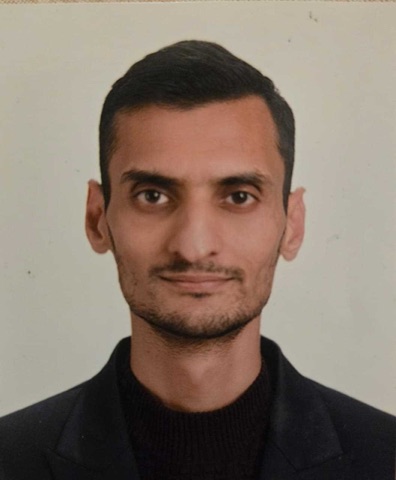
"The voice is the whole product. Get the accent right and the rest follows."
Saif runs all KSA AI receptionist deployments end-to-end — in-person discovery in Riyadh (or remote if you're outside KSA), voice scripting in Khaleeji or MSA, the cutover, and the first 30 days of supervised tuning. He's bilingual EN/AR and used to sitting in real Saudi customer calls before the AI script is written.
Deployment process — kickoff to live calls in 2–3 weeks
Most KSA deployments reach live cutover in 14–21 calendar days. The variance is mostly integration complexity. Here's the path that works.
Step 1 — Discovery & voice scripting
In-person at your Riyadh location (or remote if outside KSA). Saif sits in on 4–8 real customer calls, captures the actual conversational patterns, then drafts the agent script in Khaleeji + MSA + English. Your team reviews and signs off before the build starts.
Step 2 — Integration setup
Wire the agent into your existing systems — calendar (Google / Outlook), CRM/PMS (Cliniko, Pabau, Salla, Foodics, Loyverse, custom), WhatsApp Business, and your existing phone number forwarding. We do the integration work; you don't migrate anything.
Step 3 — Sandbox build & internal testing
Agent ships to a sandbox phone number. Your team calls it for two days from real phones, in real conditions — different languages, different accents, ambient noise — and flags anything that misfires. We tune in real time.
Step 4 — PDPL + escalation review
We walk through the consent capture at call start, the data-retention rules per call type, the subject-access workflow, and the escalation rules (which calls get a human, how fast, to whom). Sign-off by your operations lead before live cutover.
Step 5 — Supervised live cutover
The agent takes over your real number, starting with after-hours and overflow first, then full coverage by end-of-week. Saif monitors live for the first 5 business days — listening to real calls, flagging the 1–2% that need template adjustment. Daily standups with your team during the cutover window.
Step 6 — Ongoing operations & monthly tuning
From day 17 onward the agent runs on its own. You get a weekly dashboard (call volume, intent split, escalation rate, booking conversion), and we tune monthly — adding new intents as your business changes, adjusting language patterns as you observe them, refining the escalation rules. Cancel any month.
Integrations we ship with التكامل
The AI receptionist isn't useful in isolation — its job is to write the booking into your existing system. Below is what we integrate as part of standard implementation. For systems not on this list, we quote the integration as part of scope (typically 5–15 hours of additional engineering).
If your back-office is paper-based, we'll recommend the simplest digital write-back layer first (usually Google Workspace + one calendar tool) before deploying the AI. The agent is a force-multiplier; it's not a substitute for systems hygiene.
PDPL, Saudization, and the questions worth answering up front
Data residency. Call transcripts and structured customer data can be stored in Saudi-region cloud (we deploy on regional infrastructure for KSA-resident clients on request). For multi-country clients, we can pin per-call data to the caller's country.
PDPL compliance. Saudi's Personal Data Protection Law (enforced from September 2024 under SDAIA) applies to any processing of personal data of KSA residents. We handle the practical compliance work — consent capture at call start, retention rules per use case, subject-access workflow, breach-notification protocol — as part of every deployment. Creatrixe is on the SDAIA Personal Data Protection consultant-registry application track. We're not a law firm; for novel edge cases we work with your in-house counsel or recommend Saudi privacy counsel.
Saudization (Nitaqat). The blunt answer: the AI receptionist replaces missed calls, not employed receptionists. Most KSA SMEs we work with were already losing after-hours and lunch-break call volume — the AI captures that. For SMEs running active receptionist desks, we typically deploy the AI for overflow + after-hours and leave the human team to handle in-person and complex calls where Nitaqat-eligible Saudi nationals add the most value. We do not recommend deploying AI receptionists as a Saudization workaround; the regulator is looking at this and it's not a posture we want our clients in.
Where this is the wrong tool. Call volume under 80/month → cheaper to hire part-time. Predominantly B2B sales calls → frustrates more than helps. Paper-based back office → fix systems first. We will say so on the discovery call.
Related work on /sa/ روابط ذات صلة
The AI receptionist is one of several services we ship for KSA SMEs. Adjacent pages on this section:
- AI Agents for Clinics in KSA & GCC — cosmetic, dental, GP. MOH-compliant intake.
- AI Agents for Restaurants in KSA — Foodics / Marn / Rasid integrations, Ramadan-aware booking.
- AI Agents for Salons in KSA — gender-specific call routing, women's + men's barbershops.
- AI Agents for Law Firms in KSA — intake automation, MOJ-aware compliance posture.
- Kafalah, Monsha'at, SIDF Tanafusiya — how Saudi SMEs typically fund AI implementation.
- How we work in the GCC — scoping, milestones, payment cadence.
The canonical product page for AI Receptionist (Canadian SMB version) sits at /services/ai-receptionist/; this page is the KSA-localized variant.
Common questions أسئلة شائعة
Does the AI receptionist actually understand Arabic, or just translate?
It speaks Arabic natively — both Modern Standard Arabic for formal/business intake and Khaleeji (Gulf) Arabic for the conversational flow most Saudi callers expect. The voice model is trained on Gulf accents, not generic MENA TTS. Mixed-language calls (caller drifts between Arabic and English mid-sentence — common in Riyadh, Jeddah, and the Eastern Province) are handled without breaking. The model can also default to formal MSA for callers from non-Khaleeji backgrounds, configurable per-business.
Can it book appointments on the Hijri calendar?
Yes. The booking layer treats Hijri and Gregorian as equivalent and converts in either direction. A caller saying "next Wednesday" gets the right date regardless of which calendar your CRM uses. The system is also aware of Ramadan operating hours, Hajj-season impact on staffing, and Saudi Friday-Saturday weekends — your team configures the rules once and the receptionist applies them consistently.
How is this different from Twilio Voice or a generic AI phone service?
Generic services give you the dial-tone and the model — you still need to build the integrations, the call scripts, the calendar logic, and the escalation rules. Creatrixe ships the productized version: bilingual voice already tuned, calendar integration already wired (Google, Outlook, Salla, Foodics, Saudi PMS systems), WhatsApp follow-up baked in, and a Saudization-aware escalation rule so human handoffs route to the right Arabic-speaker on your team. You buy the result, not the kit.
What does it cost in SAR?
Implementation is a one-time SAR 16,000–45,000 depending on integration complexity (single-calendar single-line at the low end, multi-location with CRM write-back and WhatsApp follow-up at the high end). Monthly operations run SAR 750–3,000 depending on call volume and number of locations. No per-minute usage fees, no SaaS lock-in — you own the deployment. Saudi business banking and SAR invoicing supported; we can also bill in CAD or USD if you prefer.
How fast can it be live in Riyadh?
Typical deployment is 2–3 weeks from kickoff to live calls. Week 1 is in-person discovery in Riyadh (or remote if outside KSA), voice scripting in your brand's tone, and integration setup. Week 2 is build and internal testing on a sandbox number. Week 3 is supervised live cutover with your existing forwarding rules. A single-line, single-calendar deployment with no CRM integration can ship in under 10 business days. Saif handles in-market work; the build team is in Burnaby BC.
Will it work with Saudi-specific systems (Salla, Foodics, local PMS, etc.)?
Yes for Salla, Foodics, Marn, Rasid, Loyverse, Cliniko, Pabau, and the major patient-management systems used by Saudi clinics and salons. For systems we haven't integrated yet (custom builds, niche PMS), we quote the integration as part of implementation — usually 5–15 hours of additional work. The agent uses standard API patterns, so even custom back-ends are tractable. If your back-office is paper-based, we'll suggest the simplest digital write-back layer first.
Is the data stored in KSA, and is PDPL compliance handled?
Call transcripts and structured customer data can be stored in Saudi-region cloud (we deploy on regional infrastructure for KSA-resident clients on request). The Saudi Personal Data Protection Law (PDPL, enforced from September 2024) applies to any processing of personal data of KSA residents — we handle the practical compliance work (consent capture at call start, retention rules per use case, subject-access workflow) as part of every deployment. Creatrixe is on the SDAIA Personal Data Protection consultant-registry application track. We are not a law firm — for novel edge cases we work with your in-house counsel or recommend Saudi privacy counsel.
What about Saudization and the staff this might replace?
The blunt answer: the AI receptionist replaces missed calls, not employed receptionists. Most Saudi SMEs we work with were already losing the after-hours and lunch-break call volume — the AI captures that and books it. For SMEs running active receptionist desks, we typically deploy the AI to handle overflow and after-hours and leave the human team to handle in-person and complex calls where Nitaqat-eligible Saudi nationals add the most value. We do not recommend AI receptionists as a Saudization workaround; the regulator is looking at this and it's not a strategy we want our clients in.
The honest pre-call read
If you're about to book the demo, here is the short version of what we'll tell you on it — so you can decide whether the call is worth your time.
- If your inbound call volume is under 80 calls/month, a part-time human is cheaper. We'll say so.
- If your callers are predominantly enterprise B2B (long-form sales conversations, RFPs, contract negotiations), the AI receptionist is the wrong tool — those need a human ear from minute one.
- If your business is paper-based and you don't yet have a digital calendar, fix that first. The AI is a force-multiplier, not a substitute for systems hygiene.
- If your missed-call rate is north of 25%, you have a clear sense of which call types should escalate to a human, and your back-office is digital — this tool earns its keep inside the first 60 days. We've measured it.
The longer view on how we scope engagements across the GCC sits at how we work in the GCC.
Book a 30-minute demo with Saif
In person at Olaya Street or remote. We'll walk you through a live Khaleeji-language call against your business profile, show the integration with whichever calendar/CRM you use, and quote a fixed implementation budget — usually inside the call.